
Unlock True Lightweight Supersport Control With the Yamaha R3 2025
Before investing in the Yamaha R3, explore full geometry analysis, torque behavior, track setup potential, real ownership numbers, and competitive comparisons.
The Yamaha R3 continues to define what an entry-level supersport should represent in the United States: balance, predictability, and long-term value.
Instead of overwhelming riders with excessive displacement, Yamaha engineered this platform around precision handling and high-rev efficiency.
In 2025, the model remains one of the most technically disciplined motorcycles in the 300–400cc category.
Compare Kawasaki Ninja 500 performance specs, ownership costs, and real-world riding comfort before making your decision.
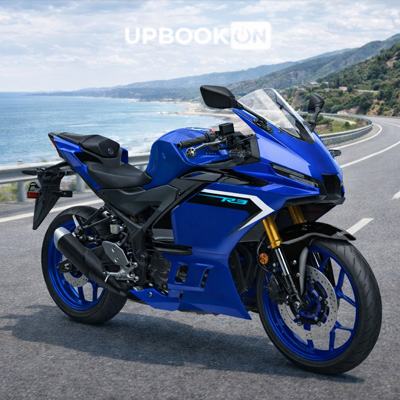
Yamaha R3 Engine Architecture and Torque Curve Behavior 🚀
At the core of the Yamaha R3 sits a 321cc liquid-cooled parallel-twin engine utilizing dual overhead cams and four valves per cylinder.
The short-stroke configuration (68.0mm bore x 44.1mm stroke) enables rapid revving while maintaining reliability under sustained stress.
Peak output reaches approximately 42 horsepower at 10,750 rpm and 21.8 lb-ft of torque at 9,000 rpm.
This linear delivery allows riders to apply throttle with precision during corner exit, minimizing traction loss and improving confidence.
| Specification | Yamaha R3 2025 |
| Engine Type | 321cc Parallel Twin |
| Valve Train | DOHC, 8 valves |
| Bore x Stroke | 68.0mm x 44.1mm |
| Compression Ratio | 11.2:1 |
| Max Horsepower | ~42 hp |
| Max Torque | ~21.8 lb-ft |
| Fuel Delivery | Electronic Fuel Injection |
| Transmission | 6-speed |

Yamaha R3 Chassis Geometry, Weight Distribution, and Handling Precision 🏍️
The diamond-type steel frame forms the structural backbone of the Yamaha R3, delivering rigidity without unnecessary mass.
With a wet weight of approximately 375 pounds, the motorcycle maintains an ideal balance between agility and stability.
Wheelbase measures roughly 54.3 inches, striking a compromise between quick turn-in and straight-line composure.
Weight distribution favors front-end feel, improving braking feedback and corner entry stability.
Critical handling numbers include:
- Rake: approximately 25 degrees
- Trail: approximately 3.7 inches
- Front Suspension: 37mm KYB inverted fork
- Rear Suspension: Monocross shock
- Front Brake: 298mm disc with ABS
- Rear Brake: 220mm disc with ABS
These geometry values allow the Yamaha R3 to maintain stability under heavy braking while preserving responsive steering.
The inverted fork enhances torsional rigidity, improving confidence during aggressive corner entry.
Stock tire sizes (110/70 front, 140/70 rear) create neutral steering characteristics.
Performance-oriented tire upgrades significantly increase lean-angle grip and braking performance without altering chassis balance.
Ten-Year Ownership and Operating Cost Projection for the Yamaha R3 💵
The MSRP of the 2025 Yamaha R3 begins around $5,499 in the United States.
While the purchase price remains attractive, evaluating long-term ownership costs provides a clearer financial perspective.
| Expense Category | Estimated 5-Year Cost |
| Insurance | $3,000 – $6,000 |
| Fuel | $2,000 – $3,200 |
| Maintenance | $2,000 – $3,500 |
| Tires & Wear Items | $1,500 – $2,500 |
| Depreciation | $1,500 – $2,000 |
Financing and Payment Simulation 📊
| Purchase Price | Down Payment | Term | APR | Est. Monthly |
| $5,499 | $500 | 60 months | 8% | ~$110 |
| $5,499 | $1,000 | 48 months | 7% | ~$107 |
| $5,499 | $1,500 | 36 months | 6.5% | ~$125 |
Yamaha R3 Versus Key Lightweight Supersport Competitors ⚔️
The 300–400cc supersport category includes strong rivals, yet the Yamaha R3 continues to differentiate itself through engineering balance and reliability.
| Model | Horsepower | Wet Weight | MSRP |
| Yamaha R3 | 42 hp | 375 lbs | $5,499 |
| Kawasaki Ninja 400 | 45 hp | 366 lbs | $5,699 |
| KTM RC 390 | 44 hp | 379 lbs | $5,899 |
| Honda CBR300R | 30 hp | 357 lbs | $4,999 |
Professional Track Setup Path for the Yamaha R3 🏁
The R3 is widely used in entry-level racing leagues and advanced riding schools.
Because horsepower is moderate, riders concentrate on braking precision, corner entry timing, and throttle discipline.
Common professional upgrades include:
- Adjustable rearsets for optimized body positioning
- Steel-braided brake lines for sharper braking feel
- Suspension re-valving and spring upgrades
- Lightweight exhaust systems
- ECU tuning for refined throttle response
These enhancements amplify performance without fundamentally altering the structural integrity of the platform.
Learn how auto financing with no money down works in the US, who qualifies, real lender requirements, risks, and smart strategies.
Reliability, Maintenance Intervals, and Resale Stability 🔧
Yamaha’s engineering standards ensure consistent durability.
Oil changes are typically recommended every 3,000–4,000 miles, and valve clearance inspections follow manufacturer schedules.
Well-maintained examples of the Yamaha R3 frequently exceed 30,000–40,000 miles without significant mechanical issues.
Depreciation averages between 25% and 35% over three years, reinforcing strong resale positioning within the lightweight sport segment.
Because demand remains steady nationwide, the R3 maintains liquidity in the used motorcycle market.
Refine Skill and Long-Term Value With the Yamaha R3 Platform 🚘
The R3 demonstrates that effective supersport performance stems from geometry, balance, and rider engagement rather than engine size alone.
Its lightweight chassis encourages technical growth, while its rev-focused twin-cylinder engine rewards disciplined throttle control.
Operating costs remain controlled, financing remains accessible, and resale value remains stable.
For riders committed to mastering corner speed, braking precision, and ownership efficiency, the R3 stands as one of the most rational and rewarding supersport motorcycles available.
FAQ ❓
- Is the Yamaha R3 suitable for long highway rides?
- Yes, it maintains highway speeds comfortably, though wind resistance becomes noticeable at higher velocities.
- What is the top speed?
- Under optimal conditions, it typically reaches approximately 110–115 mph.
- Is the R3 appropriate for beginner riders?
- Yes, its linear power delivery and lightweight handling make it approachable for new riders.
- How expensive is maintenance annually?
- Most owners report annual maintenance costs between $400 and $750 depending on usage.
- Does the Yamaha R3 hold resale value well?
- Yes, depreciation remains moderate compared to many motorcycles in its segment.
