
Explore the New Electric Cars 2026 Bringing Next-Generation EV Technology
Before choosing your next EV, understand how the new electric cars 2026 combine longer driving range, advanced electric platforms, and intelligent software ecosystems.
The global transition to electric mobility is accelerating rapidly, and the new electric cars 2026 represent one of the most technologically advanced generations of vehicles ever produced.
Major automakers are introducing redesigned EV platforms, more energy-dense battery packs, and sophisticated onboard software systems that significantly improve efficiency and driving performance.
Discover how auto financing pre approval can give you clarity, stronger negotiation leverage, and smarter loan decisions.
Technological Evolution Behind the New Electric Cars 2026 ⚡
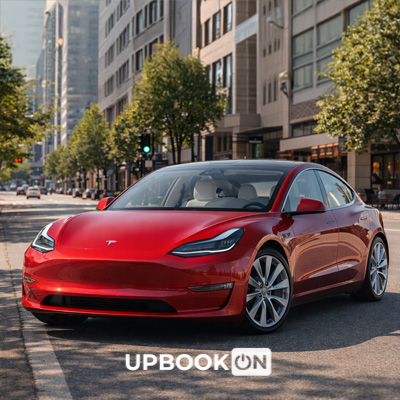
The new electric cars 2026 are built on purpose-designed EV architectures that maximize efficiency and structural integrity.
Unlike gasoline vehicles converted to electric power, these platforms integrate the battery pack into the chassis floor, improving weight distribution and lowering the center of gravity.
This engineering approach improves vehicle stability during cornering and acceleration.
In addition, EV platforms allow manufacturers to place electric motors directly on the axles, enabling single-motor, dual-motor, or even tri-motor performance configurations.
Many vehicles in the new electric cars 2026 category also incorporate advanced thermal management systems that regulate battery temperature during fast charging.
These systems extend battery life and ensure consistent performance across different climates.

Core Electric Technologies Powering the New Electric Cars 2026 🔋
Electric vehicles rely on a combination of high-capacity battery packs, power electronics, and sophisticated software to deliver efficiency and performance.
These technologies continue evolving rapidly in the new electric cars 2026 generation.
Battery Chemistry and Energy Density Improvements 🔬
Modern EV batteries are significantly more energy-dense than previous generations.
Many vehicles among the new electric cars 2026 use lithium-nickel-manganese-cobalt (NMC) or lithium-iron-phosphate (LFP) chemistry depending on performance goals.
Battery capacities now commonly range between 75 kWh and 110 kWh. Higher energy density allows vehicles to store more electricity without dramatically increasing weight.
Manufacturers also integrate advanced battery management systems that continuously monitor voltage, temperature, and charge cycles.
Improved cooling systems, often using liquid cooling channels between battery cells, prevent overheating during high-power charging sessions.
These systems help maintain battery durability and ensure consistent performance across thousands of charge cycles.
High-Voltage Charging Systems and Infrastructure ⚡
Charging speed is one of the most important technological improvements in the new electric cars 2026.
Several modern EV platforms use 800-volt electrical architectures instead of the traditional 400-volt systems.
Higher voltage systems reduce current flow during charging, which minimizes heat generation and enables significantly faster energy transfer.
Under optimal conditions, high-power charging stations can deliver 200 kW to 350 kW of charging power.
This technology allows many EVs to recover up to 80 percent battery capacity in approximately 20 minutes.
As charging networks expand across highways and metropolitan areas, the practicality of owning one of the new electric cars 2026 continues improving.
Detailed Technical Analysis of the New Electric Cars 2026 🚗
The electric vehicle market in 2026 includes a wide range of sedans, SUVs, and crossover vehicles.
Each manufacturer uses different battery sizes, electric motors, and digital systems to optimize performance and efficiency.
Tesla Model 3 Highland 2026 Technical Overview ⚡
The Tesla Model 3 Highland represents a major refinement of Tesla’s most popular electric sedan.
The vehicle uses Tesla’s updated electric platform featuring improved aerodynamic design, redesigned suspension tuning, and enhanced cabin insulation for a quieter experience.
The long-range version uses an approximately 82 kWh lithium-ion battery pack paired with a dual-motor all-wheel-drive system.
Total system output can exceed 450 horsepower in performance configurations. Acceleration from 0 to 60 mph can occur in approximately 3.5 seconds in the Performance variant.
Energy efficiency is one of the Model 3’s strongest characteristics.
The vehicle consumes roughly 15 kWh per 100 kilometers under ideal conditions, which contributes to a driving range between 300 and 340 miles depending on configuration.
Tesla also integrates advanced regenerative braking systems that recover energy during deceleration.
Combined with Tesla’s software optimization and thermal battery management, this system significantly improves overall driving efficiency.
Hyundai Ioniq 7 Electric SUV Technical Specifications ⚡
The Hyundai Ioniq 7 is built on Hyundai’s Electric Global Modular Platform (E-GMP), which supports 800-volt ultra-fast charging capability.
This architecture enables extremely rapid energy transfer when connected to compatible charging stations.
The vehicle is expected to feature a battery capacity close to 100 kWh, providing approximately 300 miles of driving range.
Dual electric motors generate around 320 horsepower in all-wheel drive configurations, ensuring strong acceleration despite the vehicle’s larger size.
Hyundai designed the Ioniq 7 with advanced thermal battery conditioning systems.
These systems pre-heat or cool the battery before fast charging, optimizing energy flow and protecting long-term battery health.
Inside the cabin, the SUV includes multiple high-resolution digital displays, a large panoramic infotainment interface, and Level 2 advanced driver assistance technologies.
Chevrolet Equinox EV 2026 Engineering Details ⚡
The Chevrolet Equinox EV uses General Motors’ Ultium battery platform, which allows modular battery configurations across multiple electric vehicle models.
This platform uses large pouch-style battery cells arranged horizontally within the vehicle’s structural frame.
Battery capacity is estimated between 85 kWh and 90 kWh depending on the model configuration. This battery supports a driving range between 280 and 300 miles.
Front-wheel drive models produce approximately 210 horsepower, while dual-motor all-wheel-drive versions can exceed 290 horsepower.
The Ultium system also uses a wireless battery management architecture that reduces wiring complexity and improves system reliability.
This innovation allows more precise monitoring of battery cells and improves long-term durability.
In addition to powertrain improvements, the Equinox EV integrates a large infotainment display powered by modern automotive processors capable of supporting real-time navigation.
Ford Explorer EV 2026 Powertrain and Platform ⚡
The Ford Explorer EV represents Ford’s strategy of electrifying its most recognizable SUV models.
The vehicle is built using a dedicated electric architecture designed to support both rear-wheel drive and all-wheel drive configurations.
Battery capacities range from approximately 82 kWh to 100 kWh depending on trim level.
These batteries power electric motors capable of generating around 300 horsepower in dual-motor variants.
The Explorer EV integrates Ford’s advanced SYNC infotainment system with a large vertically oriented touchscreen interface.
The software includes intelligent route planning capable of identifying optimal charging stations during long-distance travel.
Ford also equips the vehicle with an advanced driver assistance suite including adaptive cruise control, automated lane centering, and collision avoidance systems.
Volkswagen ID.7 Long-Range Electric Sedan Technology ⚡
Volkswagen’s ID.7 is designed as a long-distance electric sedan focused on aerodynamic efficiency and passenger comfort.
Built on Volkswagen’s MEB platform, the vehicle integrates a large battery pack mounted within the vehicle floor structure.
The ID.7 uses a battery pack of approximately 86 kWh and supports fast charging rates exceeding 200 kW under ideal conditions.
These specifications allow the vehicle to reach a driving range approaching 350 miles depending on driving conditions.
The electric motor generates around 282 horsepower and delivers smooth acceleration optimized for highway cruising.
Volkswagen engineers focused heavily on aerodynamic efficiency, giving the vehicle a drag coefficient close to 0.23.
Inside the cabin, the ID.7 features a fully digital cockpit, augmented-reality head-up display technology, and advanced climate control systems that use smart airflow sensors.
Electric Vehicle Performance Comparison Table 📊
| Model | Battery Capacity | Est. Range |
| Tesla Model 3 | ~82 kWh | 300–340 miles |
| Hyundai Ioniq 7 | ~100 kWh | ~300 miles |
| Chevrolet Equinox EV | ~85–90 kWh | 280–300 miles |
| Ford Explorer EV | 82–100 kWh | ~300 miles |
| Volkswagen ID.7 | ~86 kWh | up to 350 miles |
Discover realistic auto loan 570 credit score strategies that can help you secure approval and avoid overpaying on high-interest car loans.
Ownership Advantages of the New Electric Cars 2026 💰
Electric vehicles provide several practical advantages compared with traditional gasoline vehicles.
One of the most significant benefits of the new electric cars 2026 is the reduced mechanical complexity of electric powertrains.
Electric motors contain far fewer moving parts than internal combustion engines.
Because of this, EVs eliminate components such as fuel pumps, exhaust systems, spark plugs, and engine oil systems.
This simplified mechanical architecture significantly reduces maintenance costs over the life of the vehicle while also improving long-term reliability.
| Cost Category | Gasoline Vehicle | Electric Vehicle |
| Fuel per year | $1,500 – $2,500 | $500 – $900 |
| Maintenance | Higher | Lower |
| Oil Changes | Required | Not required |
Updated on 03/11/2026
Charging Infrastructure Expanding for the New Electric Cars 2026 🔌
Charging infrastructure development is one of the key drivers of EV adoption.
Public charging networks across the United States continue expanding rapidly, enabling drivers of the new electric cars 2026 to travel long distances with greater confidence.
Many fast-charging networks now support ultra-high-power charging stations capable of delivering over 300 kW of power.
These stations significantly reduce charging times during road trips. Home charging systems also play an important role in EV ownership.
Level 2 home chargers operating at 240 volts can typically recharge most EV batteries overnight, allowing drivers to begin each day with a fully charged vehicle.
The Expanding Future of Electric Mobility with the New Electric Cars 2026 🌎
The automotive industry is entering a transformative period where electric vehicles will increasingly dominate new car development.
The new electric cars 2026 represent a major step toward that future by combining advanced battery technology, high-performance electric motors, and intelligent digital systems.
As battery technology continues evolving and charging networks expand, electric vehicles will become even more practical for daily transportation.
The new electric cars 2026 demonstrate how innovation in engineering and software can redefine the driving experience for modern consumers.
FAQ ❓
- Are electric vehicles faster than gasoline vehicles?
- Many EVs accelerate faster because electric motors deliver instant torque, allowing rapid acceleration from a standstill.
- How long do EV batteries typically last?
- Most manufacturers design EV batteries to last between 8 and 15 years depending on usage and charging patterns.
- Are electric vehicles safe in accidents?
- Yes. EVs undergo the same crash testing standards as gasoline vehicles and often have strong structural designs due to their battery placement.
- Do electric vehicles lose range in cold weather?
- Yes. Cold temperatures can reduce battery efficiency temporarily, but modern thermal management systems minimize this effect.
- Can electric vehicles charge at regular outlets?
- Yes. Level 1 charging using a standard outlet is possible, although it charges significantly slower than dedicated Level 2 home chargers.
