
Discover How AI for Stock Trading Can Transform Modern Market Analysis
Before relying only on charts and headlines, learn how AI for stock trading tools can support better decision-making through automation, predictive models, and real-time market analysis.
Financial markets have always rewarded investors who can process information quickly and act with discipline.
In recent years, AI for stock trading has emerged as one of the most important shifts in investing because it allows traders and analysts to evaluate huge amounts of information.
Compare latest Motorola cell phones and premium mid-range models before investing in long-term performance, endurance, and longevity.
Why AI for Stock Trading Is Expanding Across Financial Markets 📈
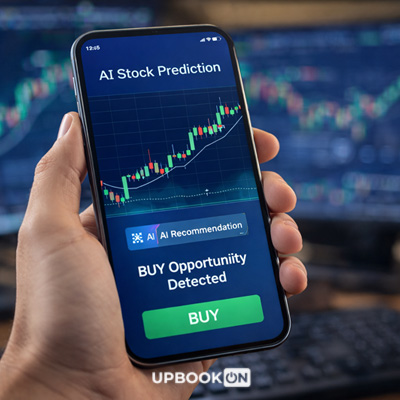
The rise of AI for stock trading is closely linked to the enormous growth of financial data.
Every market session produces a constant stream of information that includes price changes, volume fluctuations, economic releases, analyst revisions and sentiment shifts.
Human investors can analyze only a limited portion of this data at any given time. AI systems, on the other hand, are built to process vast inputs simultaneously.
This gives them the ability to identify non-obvious relationships between variables and flag opportunities or risks more quickly.
Another reason for this expansion is accessibility. AI used to be associated mainly with hedge funds and high-frequency trading firms.
Today, many retail-friendly platforms also include AI-enhanced features such as market scanning, predictive analytics, and automated alerts.
Because speed, scale, and data complexity now define modern investing, artificial intelligence is becoming increasingly central to how markets are analyzed.

How AI for Stock Trading Works in Real-World Platforms 🤖
At a practical level, AI for stock trading combines data collection, pattern recognition, model training, and signal generation.
The system first gathers information from multiple sources such as historical prices, financial statements, earnings releases, economic indicators, and sometimes alternative data.
That information is then cleaned and organized so algorithms can evaluate it.
Machine learning models look for patterns associated with specific outcomes, such as price breakouts, volatility spikes, or changes in momentum.
Once the system identifies useful relationships, it can generate outputs such as watchlists, entry signals, exit alerts, or risk warnings.
Some platforms use AI only for analysis, leaving final execution to the investor. Others connect analysis directly to automated strategies that place trades according to predefined conditions.
In both cases, the goal is the same: transform overwhelming market data into usable and timely insight.
Core Technologies Behind AI for Stock Trading Tools 💻
Modern AI for stock trading systems rely on several advanced technologies working together. Each one plays a different role in helping traders interpret the market more efficiently.
Machine Learning and Predictive Modeling for Price Behavior 🔎
Machine learning is one of the most important foundations of AI for stock trading.
These models are trained on large historical datasets and built to identify relationships between variables such as earnings growth, momentum, sector rotation, volatility, and trading volume.
For example, a model may learn that a certain combination of rising volume, strong earnings surprise, and sector momentum tends to increase the probability of a short-term breakout.
Another model may identify conditions that often precede sharp reversals after overextended rallies.
These systems do not predict the future with certainty, but they help investors think in terms of probabilities instead of impulses.
As new data flows in, models can be updated and refined to reflect changing market conditions.
Natural Language Processing and Sentiment Analysis 📰
Another major engine behind AI for stock trading is natural language processing, often called NLP.
This technology allows computers to read and interpret language from earnings call transcripts, analyst notes, financial headlines, social media discussions, and corporate press releases.
Sentiment matters because markets often react not only to hard numbers but also to tone. A company can post solid results and still decline if forward guidance sounds cautious.
NLP systems can identify positive, negative, or uncertain language patterns and convert them into measurable sentiment signals.
This helps investors track narrative shifts much faster than manual reading alone. In fast-moving markets, that speed can be highly valuable.
Main Advantages of Using AI for Stock Trading Strategies 📊
There are several reasons investors are increasingly interested in AI for stock trading. One of the largest advantages is processing speed.
AI tools can review thousands of market variables in seconds, which makes them especially useful in environments where rapid reaction matters.
Another important benefit is scale. Instead of manually screening a few companies, investors can use AI to analyze broad groups of stocks across sectors, market caps, and geographies.
Consistency is also a major advantage. Human traders often struggle with emotional decisions driven by fear, greed, or hesitation.
AI systems apply their logic uniformly, which can reduce the effect of psychological bias when analyzing setups or monitoring signals.
In addition, AI can improve portfolio research, scenario analysis, and risk monitoring.
Rather than focusing only on entry points, sophisticated tools can help investors understand volatility, correlation, and downside exposure across holdings.
Limitations and Risks of AI for Stock Trading Investors Must Respect ⚠️
Even though AI for stock trading offers powerful analytical advantages, it is not a guarantee of profits.
Financial markets remain shaped by uncertainty, structural changes, and unpredictable events such as policy shocks, geopolitical crises, or unexpected earnings surprises.
AI systems are only as strong as the data and assumptions that feed them. If a model is trained in one type of market environment, it may perform poorly in another.
This becomes especially dangerous during unusual periods when historical relationships stop behaving normally.
Another common challenge is overfitting. A model may look excellent in historical testing because it has learned the past too specifically, but then struggle in real conditions.
For this reason, experienced investors rarely use AI outputs blindly. They combine them with diversification, macro awareness, and disciplined position sizing.
The most productive mindset is to see AI as a high-level research and decision-support system, not as a flawless prediction engine.
Common Ways Investors Apply AI for Stock Trading in Practice 🧠
Investors use AI for stock trading in different ways depending on their style and objectives.
Some apply it to short-term trading, while others use it to improve medium- or long-term stock selection.
Several practical applications stand out:
- Screening stocks based on momentum, growth, valuation, or quality factors
- Monitoring financial news and earnings sentiment in real time
- Building quantitative models for entry and exit decisions
- Optimizing portfolio diversification and risk exposure
- Generating alerts for unusual price or volume behavior
Retail investors often interact with AI through user-friendly dashboards and stock screeners.
Institutional investors may go deeper by building custom models, proprietary data pipelines, and automated execution systems.
This flexibility is one of the reasons AI continues to expand across different segments of the investing world.
Looking for smarter ways to analyze the stock market? Discover how ai for stock trading can help investors interpret complex data faster.
Practical Examples of AI for Stock Trading Use Cases and Value 💰
To better understand the role of AI for stock trading, it helps to look at how it is commonly used in real research and trading workflows.
| AI Use Case | Main Input | Typical Output |
| Stock screening | Price data, fundamentals, volume | Ranked stock candidates |
| Sentiment analysis | News, filings, earnings calls | Bullish or bearish score |
| Risk monitoring | Volatility, correlations, drawdowns | Portfolio alerts |
| Signal detection | Technical and statistical inputs | Entry or exit alerts |
These outputs do not remove uncertainty, but they help investors structure their analysis around evidence rather than guesswork.
Types of Platforms Associated with AI for Stock Trading 📉
Investors researching AI for stock trading will encounter several categories of tools, each built for a different purpose in the investment process.
The most common categories include:
- AI-powered stock screeners
- Quantitative analytics platforms
- Automated trading systems
- Robo-advisory portfolio managers
- News intelligence and sentiment dashboards
A long-term investor may benefit more from AI-enhanced portfolio tools and stock research systems.
A short-term trader may prefer platforms focused on live scanning, alert generation, and execution logic.
Choosing the right category depends on time horizon, trading frequency, and tolerance for complexity.
The Future of AI for Stock Trading and Investor Decision-Making 🚀
The role of AI for stock trading will likely keep growing as financial markets become more data-intensive and more competitive.
Investors increasingly need tools that can transform overwhelming information into structured insight, and artificial intelligence is uniquely well suited to that challenge.
In the years ahead, AI systems may become better at integrating macroeconomic data, intermarket signals, sector flows and live sentiment into unified dashboards.
They may also become more personalized, adjusting outputs according to the investor’s goals, time horizon, and risk profile.
Investors who combine AI-driven research with sound judgment, clear strategy, and disciplined risk management will likely benefit the most.
In that sense, artificial intelligence is not replacing investors. It is making better investing processes more possible, more scalable, and more informed.
FAQ ❓
- What is AI for stock trading used for?
- It is used to analyze market data, identify patterns, monitor sentiment, generate alerts, and support investment decisions.
- Can beginner investors use AI trading tools?
- Yes. Many platforms now offer simplified AI features designed for retail investors who want research support and data-driven insights.
- Does AI make stock trading risk-free?
- No. AI can improve analysis, but markets remain uncertain and losses are always possible.
- What is the biggest strength of AI in trading?
- Its biggest strength is the ability to process massive amounts of information quickly and consistently across many assets.
- Should investors depend only on AI to trade stocks?
- No. AI works best when combined with human judgment, diversification, and disciplined risk management.
