
Honda Civic Cost Structure and Financial Outlook in 2025: Efficiency, Stability, and Ownership Value
Understanding the Honda Civic’s full ownership profile requires analyzing fuel economy, financing structure, depreciation trends, and long-term affordability.
As financing costs and vehicle prices remain elevated, buyers increasingly prioritize vehicles offering predictable expenses and strong long-term economic balance.
The Honda Civic continues to stand out by combining efficient operation, proven reliability, and consistent resale strength.
Evaluating these financial components helps drivers make better ownership decisions aligned with long-term financial planning.
Fuel Consumption Impact and Ownership Expense Projection ⛽
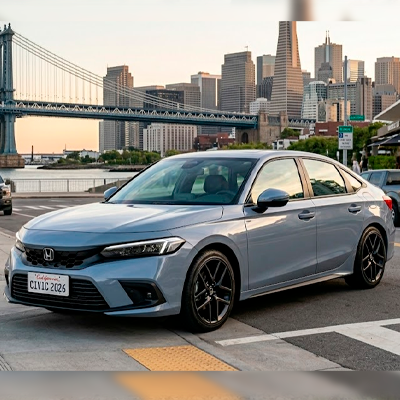
Fuel efficiency plays a major role in determining lifetime vehicle expenses.
The Honda Civic’s engine design emphasizes optimized fuel usage without sacrificing daily usability or highway performance.
EPA estimates place the Civic near 31 MPG city and 42 MPG highway, helping reduce long-term fuel spending.
Example usage scenario:
• Annual driving distance: 15,000 miles
• Average fuel price: $3.50 per gallon
• Ownership period: 5 years
| Category | Typical Compact Sedan | Honda Civic |
|---|---|---|
| Annual Fuel Use | ~490 gallons | ~410 gallons |
| Yearly Fuel Cost | ~$1,715 | ~$1,435 |
| 5-Year Fuel Cost | ~$8,575 | ~$7,175 |
| Estimated Savings | — | ~$1,400 |
This efficiency contributes to lower operational costs across the ownership period.
Updated on 02/25/2026

Power Delivery and Real-World Driving Capability ⚙️
The Honda Civic delivers refined performance suited for both urban commuting and highway travel.
Its engine configuration provides smooth acceleration, responsive handling, and reliable driving consistency.
Front-wheel drive supports efficient power distribution while maintaining stable and controlled road behavior.
| Specification | 2025 Model Overview |
|---|---|
| Engine Output | 158 hp |
| Transmission | Continuously Variable Transmission |
| Drivetrain | Front-Wheel Drive |
| 0–60 mph | ~8.2 seconds |
| Cargo Space | 14.8 cu ft |
These characteristics support balanced daily driving performance and efficiency.
Value Retention and Depreciation Performance 📉
Depreciation represents a significant component of total ownership expense.
The Honda Civic benefits from strong brand reputation and consistent used-market demand, helping preserve resale value.
Vehicles with established reliability records tend to maintain better long-term financial positioning.
Projected Depreciation Pattern 📊
| Ownership Period | Market Average | Honda Civic |
|---|---|---|
| 3 Years | ~33% depreciation | Above-average retention |
| 5 Years | ~48% depreciation | Strong resale consistency |
| 7 Years | ~60% depreciation | Continued market demand |
This trend supports greater ownership value over extended periods.
Loan Structure Example and Financial Planning Considerations 💳
Financing arrangements significantly influence affordability and total investment.
Current auto loan rates generally fall between 6% and 7% depending on credit profile and loan terms.
Example financing scenario:
• Vehicle price: $27,000
• Down payment: $4,000
• Loan balance: $23,000
• Interest rate: 6.5%
| Term | Estimated Monthly Payment | Total Interest |
|---|---|---|
| 60 Months | ~$450 | ~$4,000 |
| 72 Months | ~$400 | ~$5,500 |
Shorter repayment periods help minimize overall interest exposure.
Financial Planning Principles for Sustainable Ownership 🧠
Strategic planning helps reduce long-term financial burden.
Recommended approaches include:
- Reviewing financing options before finalizing a loan
- Selecting payment terms aligned with financial capacity
- Limiting unnecessary loan extensions
- Maintaining consistent payment reliability
These practices improve financial stability throughout ownership.
Trim Selection and Long-Term Ownership Balance ⏱️
Trim level selection influences purchase cost and resale positioning.
The Honda Civic offers multiple configurations designed to match different buyer priorities.
| Trim | Approx. MSRP | Ownership Advantage |
|---|---|---|
| LX | ~$24,000 | Strong affordability balance |
| Sport | ~$26,000 | Improved styling and features |
| EX | ~$28,000 | Enhanced comfort and efficiency |
Mid-level trims often deliver optimal balance between price and resale strength.
Updated on 02/25/2026
Insurance Costs and Maintenance Outlook 🛡️
Insurance premiums remain competitive due to the Civic’s safety ratings and widespread availability.
Routine servicing requirements remain manageable, helping ensure predictable maintenance planning.
Proper upkeep supports long-term reliability and resale confidence.
Long-Term Financial Ownership Perspective 🚀
The Honda Civic continues to represent a practical option for buyers seeking efficiency, reliability, and ownership predictability.
Its fuel economy, stable depreciation pattern, and manageable financing structure support long-term financial efficiency.
Careful planning and responsible loan management allow owners to maintain strong economic control throughout the vehicle lifecycle.
FAQ ❓
1. Is the Honda Civic economical to operate long term?
• Yes. Its fuel efficiency helps maintain lower ownership expenses over time.
2. Do loan terms affect total financing cost?
• Yes. Shorter loan durations reduce interest accumulation and overall cost.
3. Is maintenance predictable for the Civic?
• Yes. Maintenance needs remain consistent and manageable.
4. Does the Honda Civic maintain strong resale value?
• Yes. High demand supports stable long-term resale positioning.
5. Is the Civic suitable for extended ownership periods?
• Yes. Reliability and efficiency contribute to long-term ownership sustainability.
