
Subaru Outback Ownership Strategy in 2025: Stability, Capability, and Financial Balance
Understanding how the Subaru Outback delivers long-term ownership value requires analyzing durability, operating efficiency, resale strength, and financing impact within today’s U.S. automotive market.
Vehicle ownership in 2025 involves careful planning. Auto loan rates remain elevated, insurance pricing varies widely, and depreciation continues to be a major cost factor for most buyers.
Within this environment, the Subaru Outback stands out as a versatile crossover, combining off-road capability with predictable operating costs and consistent resale demand.
Exploring current financing programs, comparing payment timelines, and evaluating cost-per-mile metrics can help buyers identify the most efficient path to ownership.
Subaru Outback Cost Efficiency and Long-Term Operating Analysis🚙
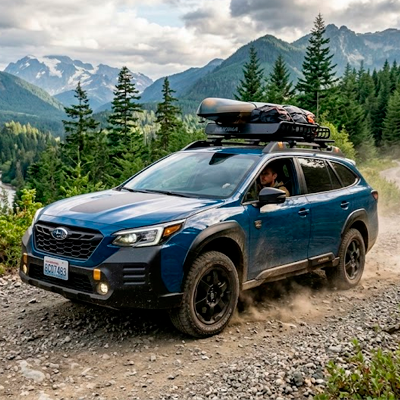
One of the most reliable ways to evaluate ownership cost is by examining fuel consumption, maintenance frequency, and long-term depreciation impact.
The Subaru Outback benefits from an efficient boxer engine design and intelligent all-wheel drive system, helping maintain balanced fuel economy without compromising capability.
EPA estimates place the Outback near 26 MPG city and 32 MPG highway, delivering competitive efficiency within its segment while maintaining full-time traction control.
Assuming the following ownership scenario:
• 15,000 miles driven annually
• Average fuel price of $3.50 per gallon
• Ownership duration of five years
| Category | Standard AWD Vehicle | Subaru Outback |
|---|---|---|
| Annual Miles | 15,000 | 15,000 |
| Gallons per Year | ~577 | ~469 |
| Annual Fuel Cost | ~$2,020 | ~$1,640 |
| 5-Year Fuel Cost | ~$10,100 | ~$8,200 |
| Estimated Savings | — | ~$1,900 |
These efficiency advantages contribute to lower operating expenses over time, improving ownership sustainability.
Updated on 02/25/2026
Capability, Reliability, and Everyday Usability ⚙️
Vehicle value extends beyond efficiency. Drivers require consistent performance, adaptability, and dependable operation across multiple conditions.
The Subaru Outback integrates a horizontally opposed engine layout, producing smooth power delivery and helping maintain mechanical balance and durability.
Standard Symmetrical All-Wheel Drive improves traction automatically, supporting enhanced control in rain, snow, and uneven terrain.
| Specification | 2025 Model Overview |
|---|---|
| Engine Output | 182 hp |
| Transmission | CVT Automatic |
| Drivetrain | Symmetrical AWD |
| 0–60 mph | ~8.5 seconds |
| Cargo Capacity | 32.6 cu ft (rear seats up) |
These characteristics support consistent reliability and real-world versatility.
Daily Driving Performance and Real-World Benefits 🚗
Smooth power delivery and stable handling contribute to comfortable daily operation, especially during extended commutes.
Low-speed maneuvering remains controlled, while highway cruising benefits from stable chassis dynamics and optimized gear ratios.
The Outback’s suspension tuning provides a balanced ride, reducing fatigue during long trips while maintaining predictable control across varying road surfaces.
As a result, drivers experience lower stress, improved comfort, and dependable long-term usability.
Depreciation Trends and Resale Value Stability 📉
Depreciation represents a major ownership cost, making resale strength an important financial factor.
Vehicles with strong reliability reputations and consistent demand typically maintain higher retained value across ownership cycles.
Subaru’s reputation for durability contributes to steady resale performance and sustained buyer interest.
Estimated Depreciation Comparison Over Time 📊
| Ownership Period | Average Vehicle | Subaru Outback |
|---|---|---|
| 3 Years | ~32% depreciation | Below segment average |
| 5 Years | ~48% depreciation | Stronger value retention |
| 7 Years | ~60% depreciation | Maintains competitive resale appeal |
Consistent demand and proven durability help the Outback preserve long-term equity and ownership value.
Financing Structure Impact and Interest Planning 💳
Loan structure plays a critical role in determining total ownership cost and financial efficiency.
Current auto loan rates generally range between 6% and 7% for qualified borrowers, depending on credit profile and loan duration.
Example financing scenario:
• Vehicle price: $34,000
• Down payment: $4,000
• Loan amount: $30,000
• Interest rate: 6.5%
| Term | Estimated Monthly Payment | Total Interest Paid |
|---|---|---|
| 60 Months | ~$587 | ~$5,200 |
| 72 Months | ~$510 | ~$6,700 |
Shorter loan terms reduce interest exposure and accelerate equity growth over time.
Financial Planning Strategies for Vehicle Ownership 🧠
Maintaining financial stability requires evaluating financing options carefully.
To improve ownership outcomes:
- Compare financing offers across multiple lenders
- Avoid extending loan terms unnecessarily
- Provide a reasonable down payment when possible
- Evaluate total loan cost instead of monthly payment alone
These strategies help reduce long-term financial burden and improve overall ownership efficiency.
Trim Selection and Long-Term Value Retention ⏱️
Selecting the appropriate trim level influences both initial cost and future resale demand.
Higher-demand trims often maintain stronger resale performance due to broader market appeal.
| Trim | Approx. MSRP | Value Perspective |
|---|---|---|
| Base | ~$30,000 | Affordable entry point |
| Premium | ~$32,000 | Balanced value and features |
| Limited | ~$36,000 | Higher comfort and demand |
| Touring | ~$39,000 | Premium features, strong resale |
Balanced trim selection improves long-term ownership flexibility.
Updated on 02/25/2026
Feature Selection That Supports Long-Term Value 🔎
Certain features contribute directly to higher resale desirability and ownership appeal.
Buyers often prioritize:
• All-wheel drive capability
• Advanced safety systems
• Neutral exterior colors
• Avoiding excessive optional add-ons
Balanced configurations maintain broader market demand and improve future resale potential.
Insurance, Maintenance, and Long-Term Ownership Outlook 🛡️
Insurance costs remain within reasonable ranges compared to similar crossover models, especially for drivers with strong driving records.
Routine maintenance intervals remain predictable, supporting manageable service expenses over time.
Subaru’s engineering reputation contributes to long-term durability, helping reduce unexpected repair risks.
Consistent maintenance documentation also improves resale value and buyer confidence.
Building Long-Term Financial Confidence Through Smart Ownership Decisions 🚀
Choosing the Subaru Outback represents more than selecting a vehicle—it reflects a strategic approach to transportation stability.
When evaluating total ownership cost, factors such as depreciation, financing terms, operating expenses, and resale demand must be considered together.
Vehicles with reliable engineering and strong resale performance help protect long-term financial positioning.
Combining efficient operation, consistent resale demand, and controlled financing creates a foundation for sustainable vehicle ownership.
FAQ ❓
1. How much can fuel savings realistically add up over five years?
• Depending on driving habits, owners may save thousands of dollars in fuel costs compared to less efficient AWD vehicles.
2. Is all-wheel drive more expensive to maintain?
• Modern AWD systems are engineered for durability and typically require minimal additional maintenance.
3. Does choosing a shorter loan term improve financial outcomes?
• Yes. Shorter loan durations reduce interest paid and help build ownership equity faster.
4. Which trim level provides the best resale balance?
• Mid-range trims often deliver the strongest combination of affordability and resale demand.
5. Is the Subaru Outback suitable for long-term ownership?
• Yes. Its durability, efficiency, and resale strength make it a reliable long-term ownership choice.
